
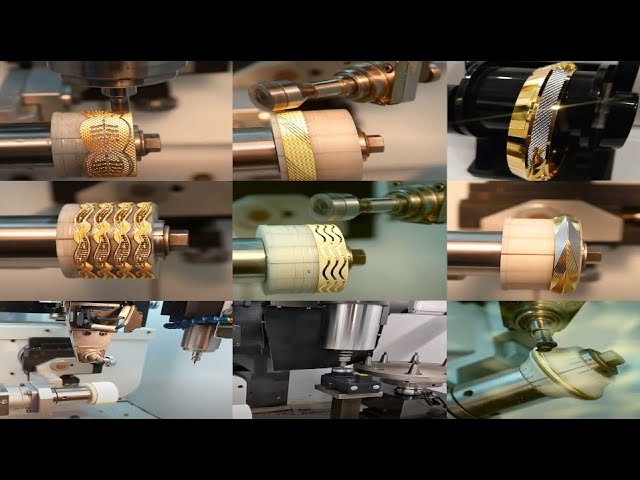
How was the ring or bracelet you love wearing made? A lot goes into making these ornaments. In this guide, we explore the process of making jewelry using the most common method: casting them in a pre-formed mold. Use it to learn the various manufacturing stages, from design to polishing and quality inspection.
What is the Process of making Jewelry?
It’s a multistage process that involves design creation and material selection. Later, the pieces are cast in molds, polished to remove imperfections, and set with precious stones — the following steps explain the art of making jewelry by casting.
1. Design Preparation
It starts with the design. Jewelers draw their inspiration from various sources: customer preferences (when the piece is custom), current fashion trends, and their imagination.
- The jewelry design process requires a visual representation, which can be a colored picture or a simple sketch
- Today, design is mainly done on a computer screen, with the help of CAD software
- Computer-aided design is way easier to use and more accurate. It also allows real-time changes
- During this time, the materials are also selected
2.The Wax Model
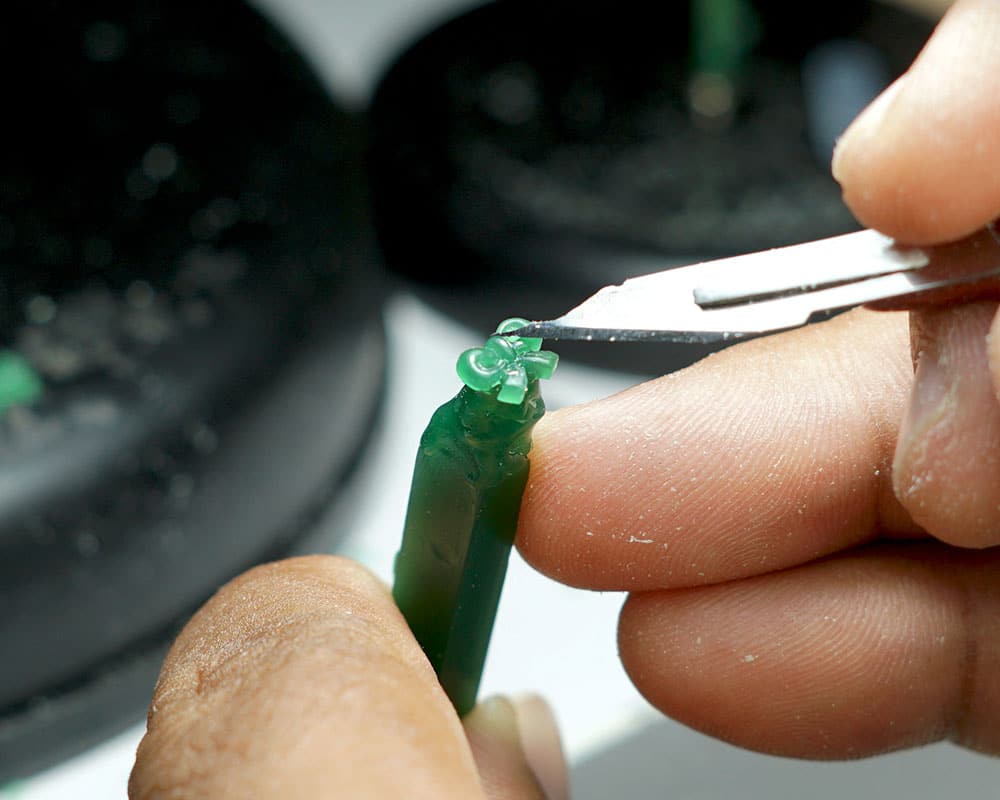
After design, the next stage involves creating a wax model. Traditionally, this process was done manually by carving wax blocks by hand. The modern method uses CNC-controlled mills and 3D printers instead. It’s way faster and offers higher precision.
- Using the design file, CNC mills carve out a piece of wax
- With 3D printing technology, the file is fed to the printer, which then creates the model using a special wax-like resin, layer after layer
- The result is a physical replica of the digital model
3. Mold Production
The jewelry production process can now move to the mold-making stage. Mold creation is the most detailed part. First, we make a silver master mold. The mold will later help produce multiple rubber molds. The last step is where we create a wax tree for casting.
Silver Master Mold
- The wax model is placed in a metal cylinder or flask
- Plaster slurry is injected into the flask and left to dry and solidify
- The flask is then baked in an electric furnace
- The wax melts, leaving a cavity that takes the shape of the wax model
- Silver is then injected into this cavity and left to harden
- Upon hardening, it produces the master mold
Rubber Molds
- The master silver is used to form multiple rubber molds
- These will be used to produce wax molds for the final pieces
- The process involves forming rubber around the mold using heat and pressure
- Depending on the required production volume, thousands of these pieces may be reproduced
Wax Tree
- The rubber molds produced earlier are injected with hot wax
- The wax is left to harden
- Later, the rubber is removed to reveal wax models
- The models are embedded on a rod or cylinder made from wax, one after another, and at 45-degree angles to it.
- This structure is called the wax tree. It allows the jewelry maker to produce multiple pieces simultaneously.
- The wax tree is placed in a cylinder or flask and filled with liquid plaster
- The plaster hardens into a mold and is heated in a kiln to remove all traces of wax
- This mold will be used to create the final jewelry pieces
4. Casting
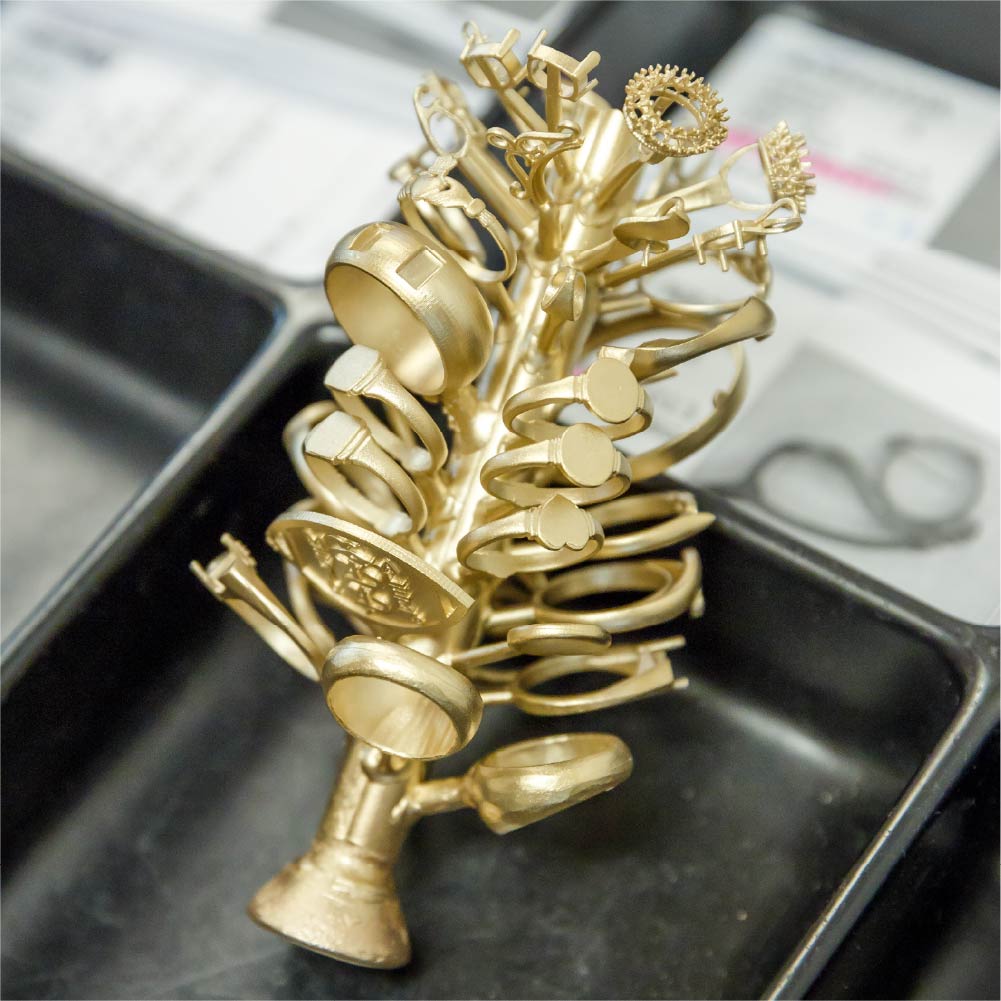
With the “wax tree mold” ready, the casting procedure can begin. The technique is called “lost wax casting.” First, we heat the required precious metal into a liquid state. Here is what happens next.
- The molten metal is then poured into the plaster mold and left to harden
- The plaster is then dissolved in water to reveal the formed jewelry pieces
- The pieces are separated from the sprue and taken to the next stage of the jewelry manufacturing process: assembly and grinding.
5. Assembly and Grinding
Various parts are joined or added to the main piece depending on the specific jewelry type. The assembly is typically done by hand, using solder, or with the help of a laser welding machine.
- The jeweler attaches or joins parts together using solder
- This is a silver allow with a lower melting point than that of the jewelry material
- Next, the piece is buffed to remove casting and soldering imperfections
- This also prepares the piece for stone setting
6.Stone Setting and Cutting
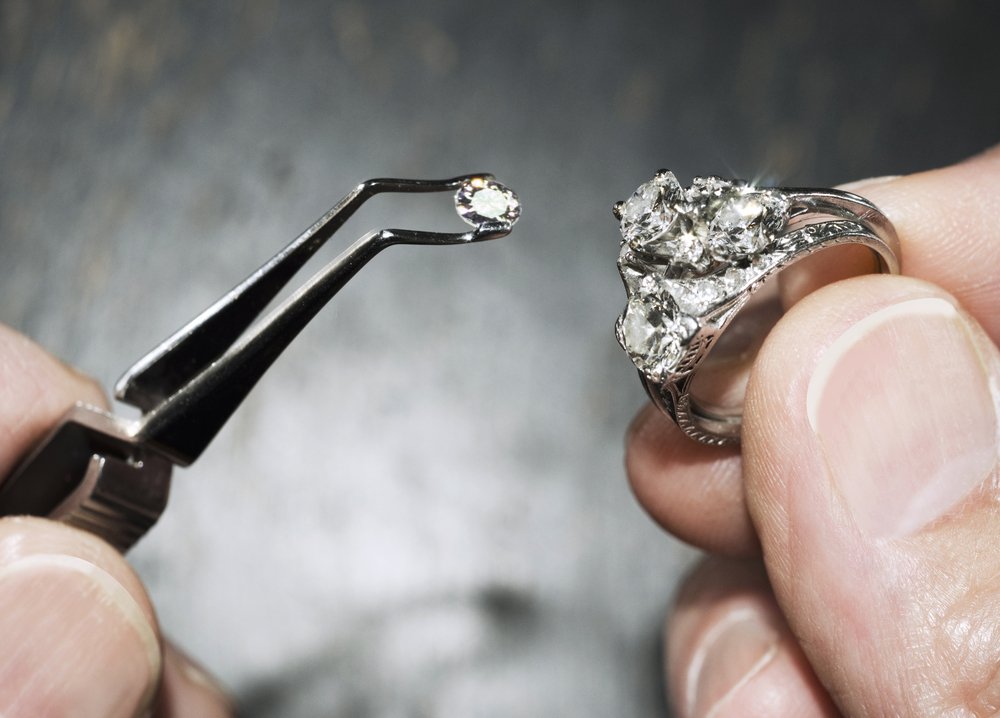
The stones are cut to the required geometries using various methods. This part of the jewelry production steps attaches the gemstones to the cast piece.
- Stone setting uses various methods, such as prong, bezel, channel, and pave setting
- Other techniques include pressure, invisible, bead, flush, miracle plate, and fishtail setting
- Stones are, after cutting, polished before and after attachment, giving them a luster and the required appearance on the piece
- Various types of precious metals are used, such as gold, platinum, silver, and palladium
7. Final Polishing and Finish
During the final stage of the jewelry-making process, the manufacturer gives the piece one last polish to help bring out the luster. It is either manual or meticulously done by hand or performed with the help of motorized tools.
- Experienced workers buff every piece until it brings out the required shine
- This is done using mild abrasive materials, with the final stage being the use of finer polishing materials to produce the ultimate shine
- The piece is finally given finished plates to improve its visual appeal
- The finish also makes it resistant to environmental factors, so it maintains its look for a long time
8. Quality Control and Inspection
Workers check the cast pieces to ensure they are perfect in the final steps of making jewelry. The following is what happens.
- Workers inspect the jewelry for scratches and other manufacturing flaws
- That also includes taking measurements to confirm dimensional accuracy
- Apart from visual examination and size confirmation, gemstones are checked for proper setting and visual appeal
- Inspected pieces are taken to the packaging department, where they’re packed in jewelry boxes and packaged for shipping
Conclusion
The intriguing process of making jewelry involves many essential steps. From design to model production and casting, we handle every detail attentively and execute every step expertly. We hope this article has provided insight into what happens inside our factories to produce that ring, bracelet, necklace, brooch, pedant, and many other pieces.